When advice feels like rejection
the RSD factor

Have you ever considered how the presence of Rejection Sensitive Dysphoria (RSD) interacts with advice?
RSD is a neurological intensity around perceived rejection or disapproval. For people who experience it, moments that others interpret as just feedback can feel emotionally catastrophic. So, when someone offers advice, especially unsolicited advice, the brain does not always hear it as guidance or a genuine offer of help. It can sometimes hear it as judgement which can sound something like “You did this wrong. I am disappointed in you.”
This translation happens fast, maybe even automatically as it is not a conscious decision to interpret things negatively. It is the brain responding to what it believes are signals of rejection. To understand why advice becomes so loaded, we have to look at the psychological tripwires that RSD interacts with.
The Competence Wound
Many neurodivergent people grow up receiving constant feedback about how they should be doing things differently. As time passes, these messages shape a persistent sense that your natural way of approaching things is somehow wrong or insufficient.
This is one of the reasons why advice can easily activate this history. Even if the current suggestion is gentle or well-meaning, it can tap into a much older narrative that still unwillingly becomes loud again.
This is also why advice can feel so disproportionate in its emotional impact. The reaction isn’t just about the present moment but years of accumulated corrections suddenly echoing in the background.
The Double Empathy Mismatch
There is also a relational misunderstanding at play. Many neurotypical people offer advice as a way of demonstrating care. In their communication framework, problem-solving together is a form of connection.
If someone is struggling, offering solutions is a way of showing they are invested in helping. However, neurodivergent communication can interpret this differently. Advice, especially when it is unsolicited, can feel like an assumption of incompetence, a lack of trust in the person’s judgement or a disregard for autonomy. So, instead of feeling supported, the person may feel subtly undermined.
This is an example of the double empathy problem, where two different communication systems assign completely different meanings to the same behaviour. The advice-giver believes they are helping, yet the advice-receiver feels corrected.
Both people are acting with good intentions, but their interpretations are misaligned.
The System Disruption Problem
We also need to take into account how much effort neurodivergent people invest in creating systems that work for their brains. Even though these systems might look unusual from the outside since they may involve specific routines, unusual workflows, or unconventional problem-solving strategies, they exist for a reason.
These systems are carefully constructed stability mechanisms and when someone suggests a different method or approach, it can feel like they are proposing to dismantle a structure that took significant effort to build and changing it can mean restarting an entire cognitive process from scratch.
The Emotional Speed of RSD
RSD also changes the speed and intensity of emotional reactions. Feedback can trigger an immediate surge of shame, panic, or defensiveness.
These reactions may feel like intense embarrassment, a sudden urge to withdraw, rumination that lasts for what feels like forever or a feeling that the relationship has been damaged.
Even though the response can appear disproportionate, from the inside, it feels like the emotional ground has suddenly shifted.
The reason why this happens is because the brain is not just processing a suggestion. It is responding to what it believes is a threat to belonging or acceptance.
The long and short of it is that advice is not neutral. It carries social meaning. It can signal hierarchy, judgement, or correction even when that was never the intention. But we do know that intention doesn’t stop impact.
Needless to say, advice can fail to land the way people expect. The information itself may be useful, but the relational framing around it makes it difficult to receive.
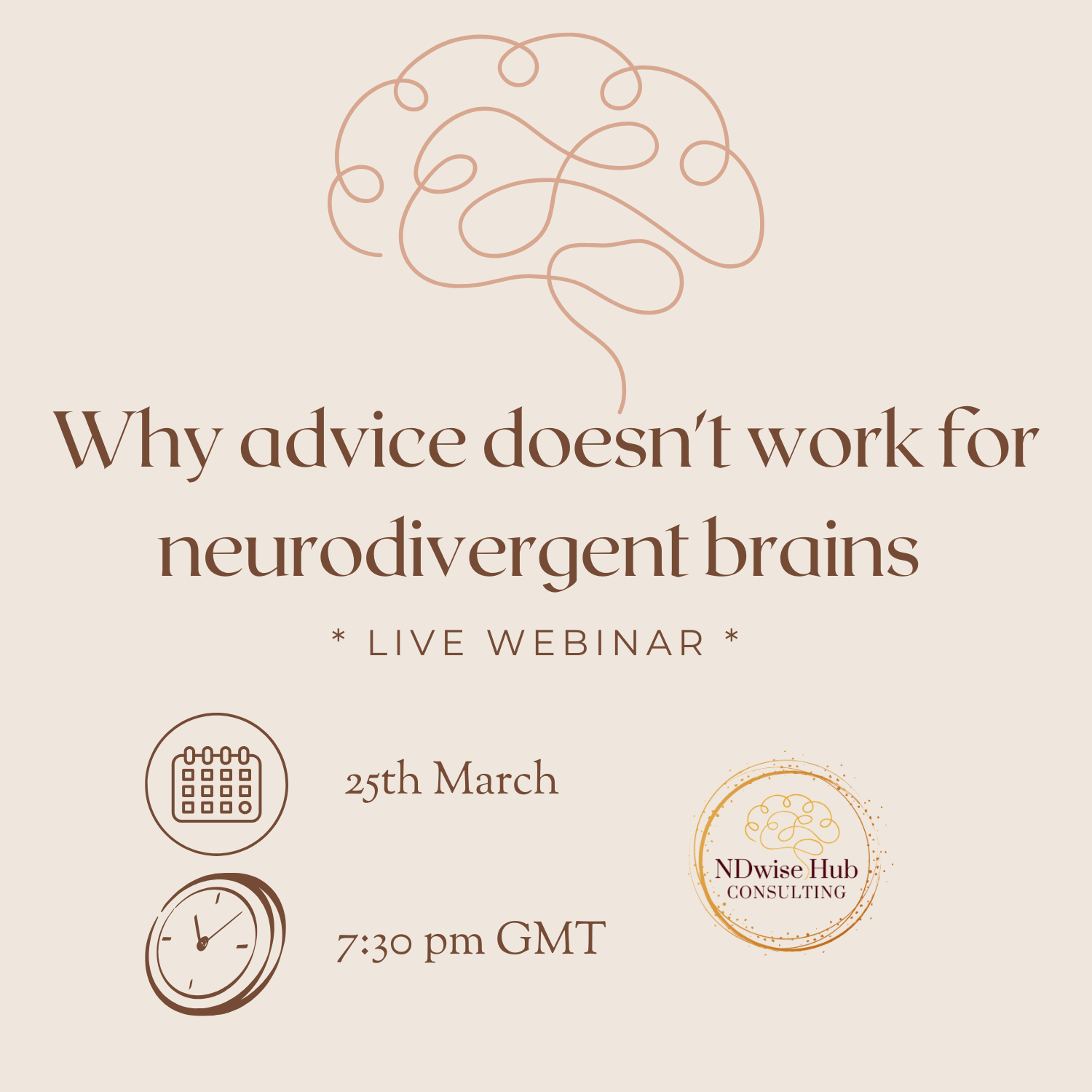
I hope you will join me on the 25th or March at 7:30pm GMT when I will host a webinar exploring advice in neurodivergent contexts in more depth.
⭐ If you’re on any social media, come join me on Facebook, Instagram or LinkedIn.
⭐ Come and have a look at my website, to find out what I do, who I am and browse a lovely catalogue of resources.